Few gummy formats sell as well on shelf as rainbow gummies — two-tone twisted ropes, sour sanded strips and multi-colour bites that look almost too good to eat. But behind every colourful rope sits a very specific piece of equipment: the double-colour gummy extruder line. This guide walks through how such a line works, what each unit does, which products you can run on it, and what to check before you invest — with real machine photos from an actual production configuration.
What “rainbow” actually requires from the machine
A rainbow gummy is not one mass with food colouring stirred in. The visual effect comes from two or more coloured masses extruded side by side through a shared die, so each rope carries distinct stripes that stay sharp after cooling and sugar sanding. That requirement shapes the whole line:
- Two (or more) parallel extrusion screws fed by separate colour streams, keeping the masses separate until the die
- A shared die head where the streams merge into one rope — stripes, twists or layered profiles are all a function of die design
- Gentle, low-shear conveying between cook and extruder, so colour does not smear and aeration is not lost
- Fast die changeover, because new shapes (ropes, laces, bites, strips) are how a rainbow gummy brand grows its SKUs
The same principle scales up: the compact double-colour unit shown here runs two masses, while larger lines extend the same architecture to four or six colours for full rainbow effects.
The line at a glance: five stages
Like any extruded gummy line, a rainbow configuration is a continuous flow. Each stage feeds the next:
| Stage | Unit | What it does |
|---|---|---|
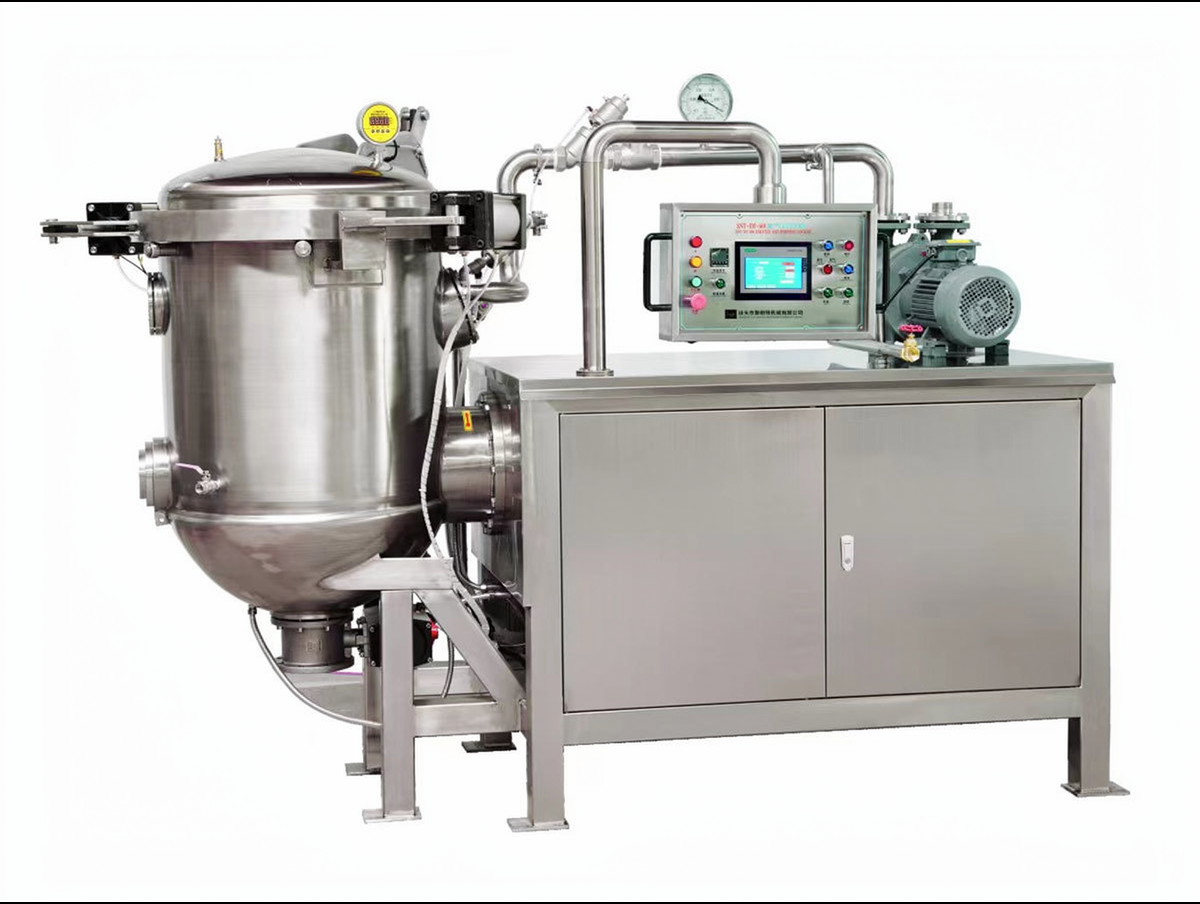
| 1. Cooking | Vacuum film cooker | Gelatin, sugar and glucose are cooked under vacuum at low temperature, preserving colour and flavour |
| 2. Conditioning | Holding / mixing vessel | Cooked base is blended with colour, acid and flavour per recipe |
| 3. Extruding | Double-colour extruder | Two coloured masses are fed to the shared die and formed into rainbow ropes or strips |
| 4. Setting | Cooling tunnel | Extruded profiles are cooled so the shape sets before cutting |
| 5. Finishing | Cutter + sugar sander | Uniform pieces are cut, then sanded with sour sugar or glazing as the recipe requires |
Inside the double-colour extruder
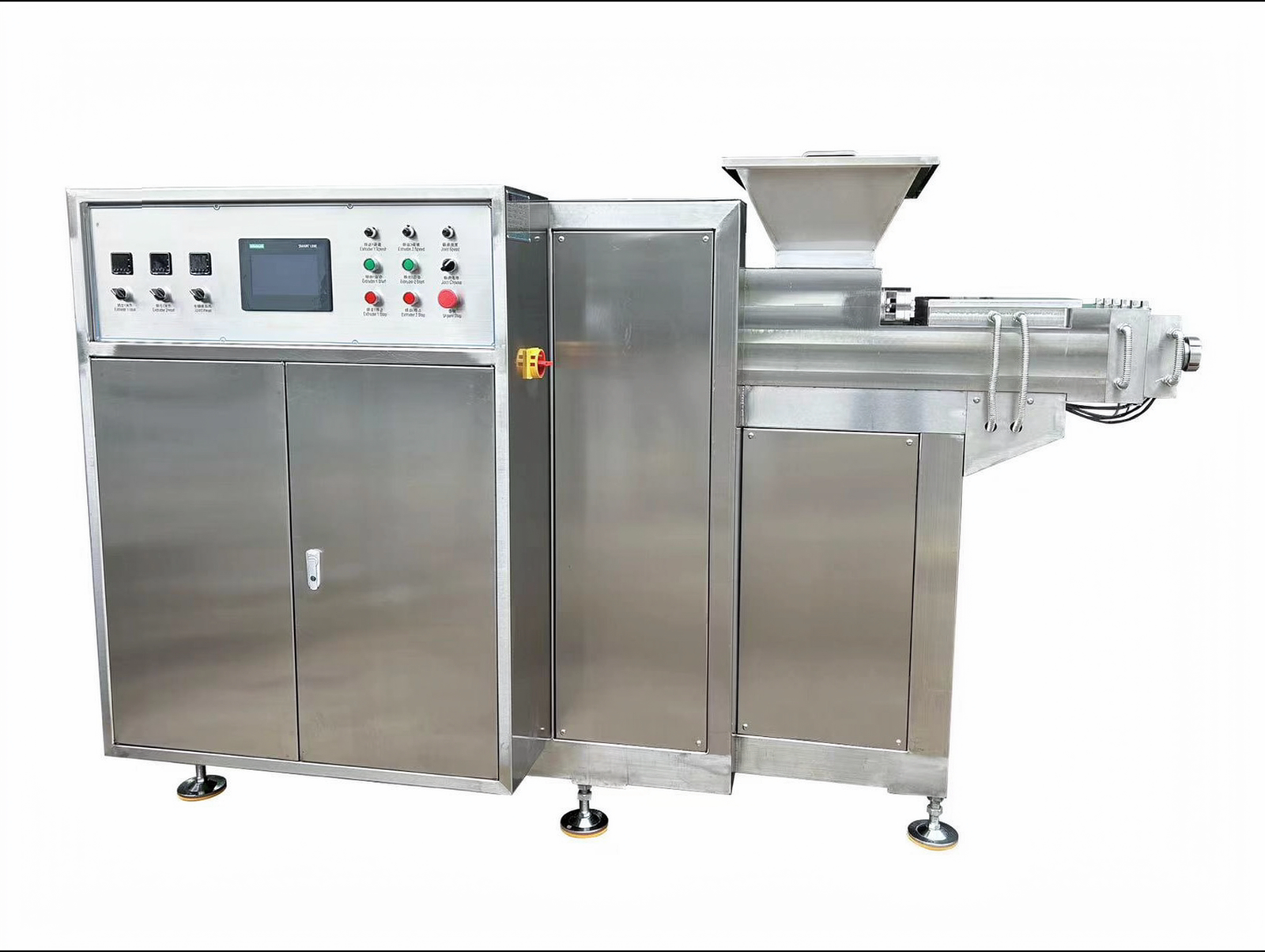
The extruder is the heart of a rainbow line. In the compact configuration below, the control cabinet houses the PLC and touch screen on the left, while the extrusion body with its feed hopper sits on the right. Two colour streams are conditioned separately, then merge only at the die — that is what keeps the rainbow definition crisp instead of muddy.
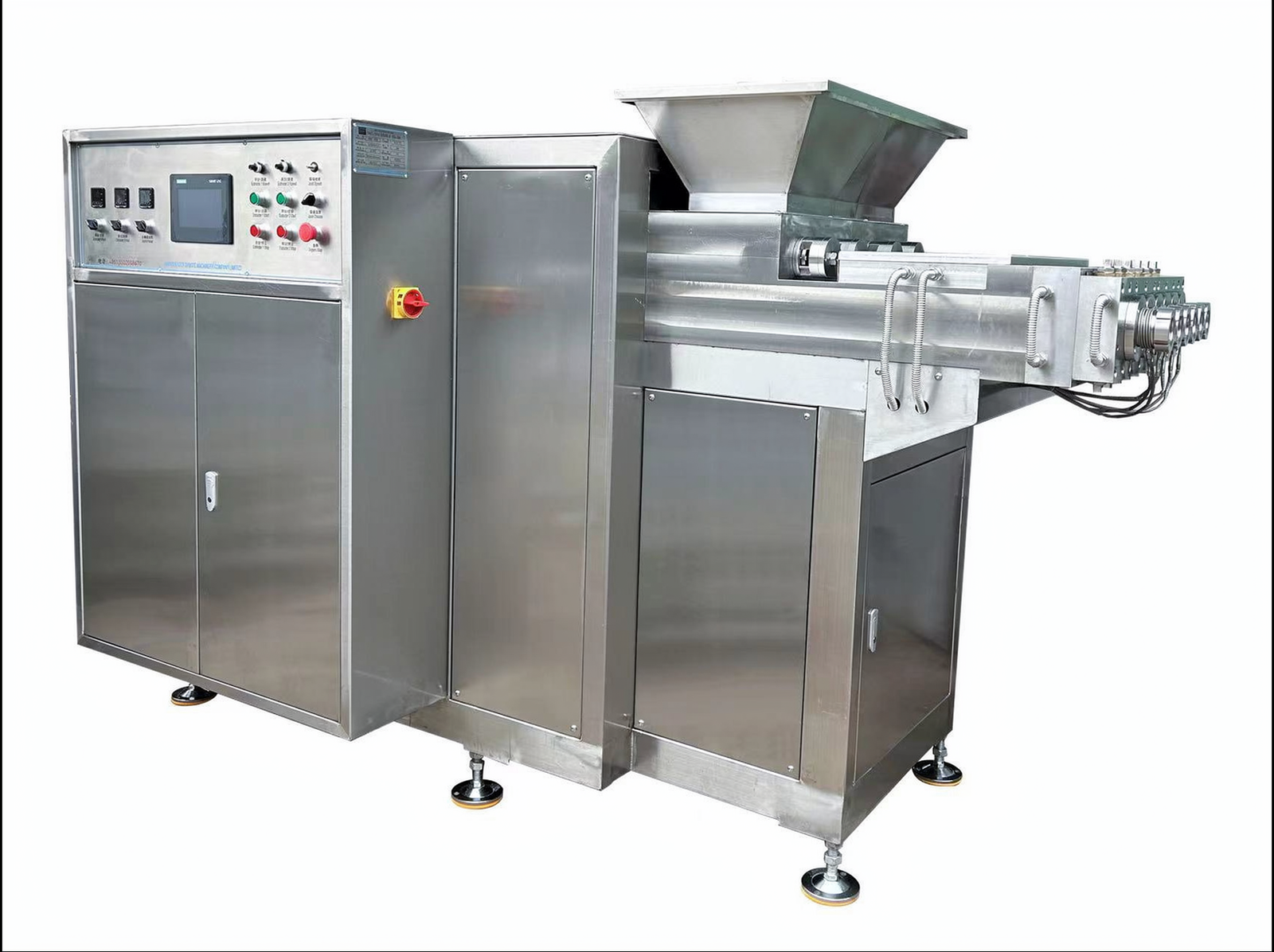
Walk around to the discharge side and you can see the die head assembly — the part that decides what the rope will look like. The multi-port die shown here forms layered rainbow strips; swap the die and the same machine runs twisted ropes, laces or filled bites.
Buyer’s note — when comparing extruders, ask three questions: how many colours the die assembly supports, how long a die changeover takes, and whether the PLC stores recipes. Those three answers predict most of your day-to-day flexibility.
From rope to retail: cutting, sanding and packing
After the cooling tunnel sets the profile, cutters divide the rope into uniform pieces. Sour rainbow strips then go through sugar sanding, which adds the frosted look and the sour punch the category is famous for. Finished pieces flow directly into a automatic feeding and packaging machine:
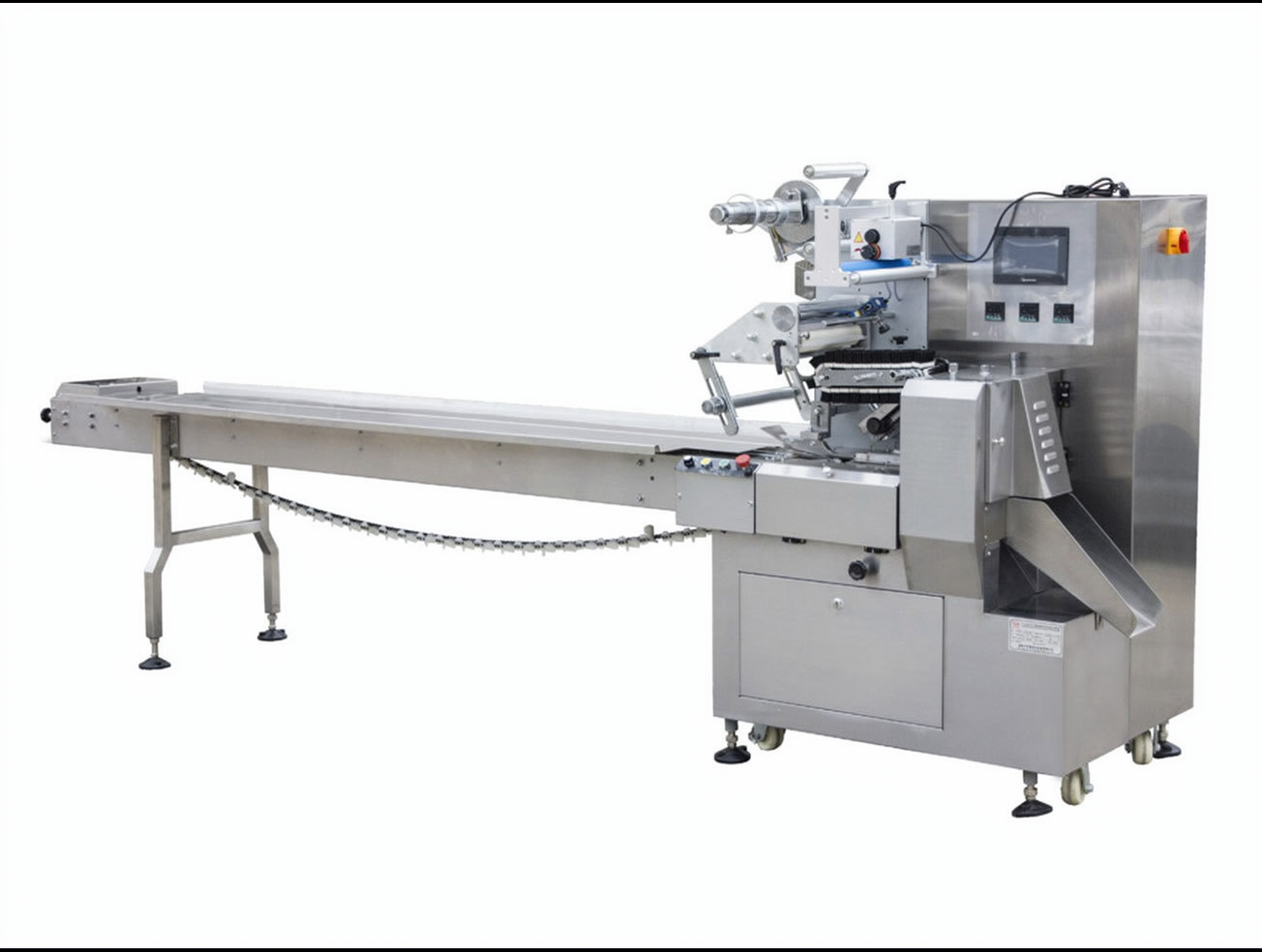
This forming-plus-packing integration is the same turnkey principle we apply across our candy machinery range: one supplier, one layout, one utility list, one team to commission it.
Products you can run on the same line
The rainbow format is a family, not a single SKU. On one double-colour line, factories typically run:
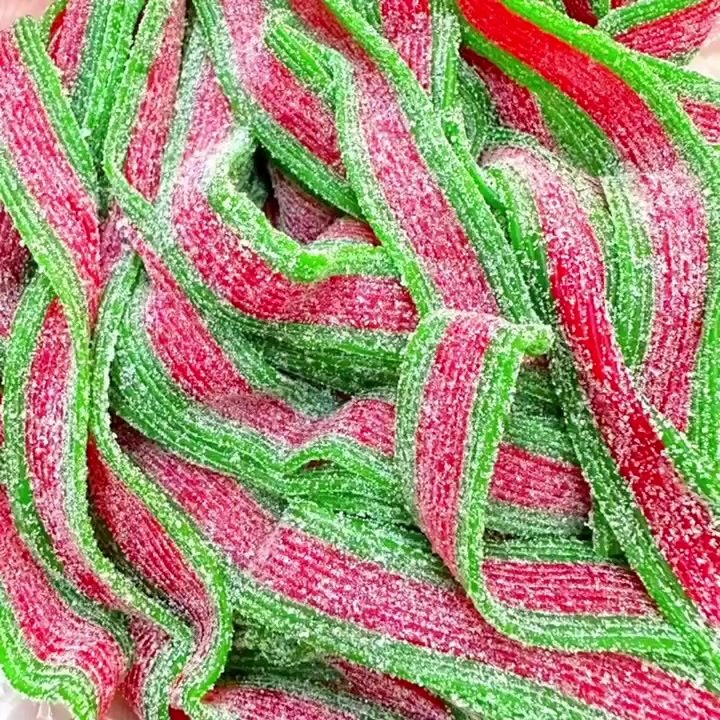
- Sour sanded rainbow strips — the best-seller shown below, red/green or multi-colour
- Two-tone twisted ropes — classic liquorice-style ropes with a colour twist
- Filled bites — co-extruded centre fills for a surprise texture
- Seasonal shapes — holiday profiles by changing the die, not the machine
Checklist before you buy a rainbow gummy line
- Colour capability. Confirm the die assembly delivers clean stripe definition at your target rope speed — ask for samples run on the actual machine.
- Die changeover cost. New shapes are your future SKUs; get the die price list up front, not after the sale.
- Cooker match. The extruder can only be as good as its base mass; a low-temperature vacuum cooker keeps colour and flavour consistent between the two streams.
- Hygiene layout. Stainless steel contact surfaces and open access for cleaning between colour changes.
- Control integration. One touch screen that links cooker, extruder and cooler beats three separate panels, especially with a small operator team.
- Commissioning and training. On-site start-up and operator training should be in the contract — the standard we follow in our turnkey project process.
Frequently asked questions
Can a double-colour extruder make four-colour rainbows?
Not in one pass — a true four-to-six-colour rainbow needs the extended multi-colour extruder. But a double-colour machine covers the two-tone products that dominate the sour-strip segment, and it is the standard first step before scaling up.
Does rainbow extrusion work for liquorice too?
Yes — the same double-colour principle runs liquorice ropes, starch-mogul style chews and toffee with recipe and die changes. If you are weighing formats, our liquorice candy production line guide covers that category in detail.
How much should I budget?
It depends on capacity, number of colours and whether packing is integrated. For budgeting logic and realistic price ranges, see our gummy production line cost breakdown.
What about the sour sugar coating step?
Sanding is done after cutting, either by a dedicated sander or a glazing line depending on the product. Plan the sanding step together with the extruder from day one — retrofitting it later usually means re-handling product manually.
Plan your rainbow line with an engineer
A rainbow gummy line is a flexible-platform investment: the machine you buy today should make next season’s shapes too. If you are evaluating options, send us your target product list — our engineers will reply with a layout, utility list and honest capacity numbers within 24 hours. You can also see the equipment running in delivered projects in our case studies.