Liquorice Candy Production Line: How It Works, What It Makes and How to Choose One
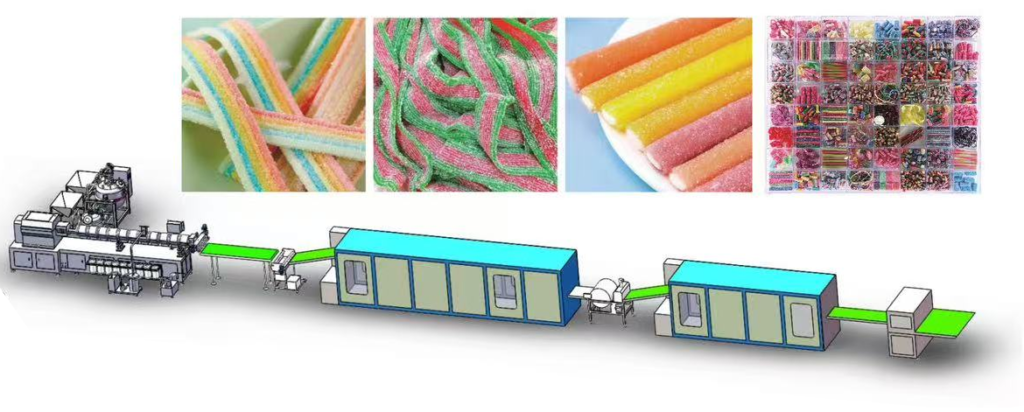
Liquorice is one of the most distinctive chewy confections in the world — and one of the most demanding to manufacture. The starch-based dough must be cooked gently, formed at high consistency and cut cleanly, or the texture collapses into either rubber or crumble. This guide explains how a modern liquorice candy production line works, what products it can make, what a full-size configuration looks like on paper, and what to check before you invest in one.
What a liquorice candy line can produce
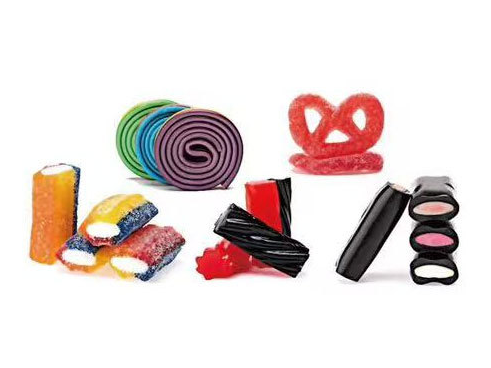
A well-configured line is not a single-product machine. The same cooking, extrusion and cutting train handles a whole family of chewy, starch-based confections:
- Liquorice candy — classic ropes, laces and sticks, plain or sugar-sanded
- Fruit-flavoured chewy starch candies — sour straps, wine-gum style pieces, rainbow ropes
- Toffee & caramel — the same cooking and forming principle applies with recipe changes
On the product-shape side, a flexible line gives you real marketing options. It can run 4–6 colours in a single rope, produce filled twisted ropes with a soft centre, and form hollow or solid profiles of almost any shape. New shapes normally mean a new extrusion die, not a new machine — which is what makes this category attractive for factories that want seasonal products without capital expenditure.
The process: six stages, one integrated line
The defining feature of a modern liquorice line is integration. Ingredient dosing, cooking, vacuum treatment, forming, cooling and cutting are connected in one continuous flow, so a batch never sits half-processed between machines:
| Stage | What happens | Why it matters |
|---|---|---|
| 1. Dosing | Sugar, glucose syrup, starch or flour, liquorice extract, colours and flavours are weighed and dosed automatically | Recipe consistency from batch to batch |
| 2. Cooking | Low-temperature vacuum cooking gelatinises the starch and dissolves the sugar mass gently | Protects colour, flavour and liquorice aroma |
| 3. Vacuum | Moisture flashes off under vacuum, lowering the boiling temperature | Chewy texture without scorching |
| 4. Forming | Multi-colour extruder forms ropes or sheets; co-extrusion adds a filled centre | 4–6 colours, filled / hollow / solid shapes |
| 5. Cooling | Cooling tunnels set the extruded profile | Stable, cuttable texture |
| 6. Cutting | Cutters divide the rope into uniform pieces for sugar-sanding, glazing or direct packing | Consistent piece weight and appearance |
Reference specification of a full-size line
Exact figures always depend on the product mix and piece weight, but a full-size installation typically lands in this range:
| Parameter | Typical value |
|---|---|
| Capacity | 500–1,000 kg/h, depending on piece weight and recipe |
| Installed power | 220 kW · 380 V / 50 Hz |
| Steam pressure | ≤ 0.6 MPa |
| Steam consumption | 150–200 kg/h |
| Footprint | approx. 43,000 × 3,000 × 1,800 mm (line in operation) |
| Machine weight | approx. 15,000 kg |
Note — these figures describe a full-size, single-shift configuration. Compact versions with lower capacity and shorter cooling sections are available for new factories; the utilities list (steam boiler sized for 0.6 MPa, three-phase power, water) should be confirmed with the supplier’s engineers before civil works begin.
Why vacuum low-temperature cooking matters here
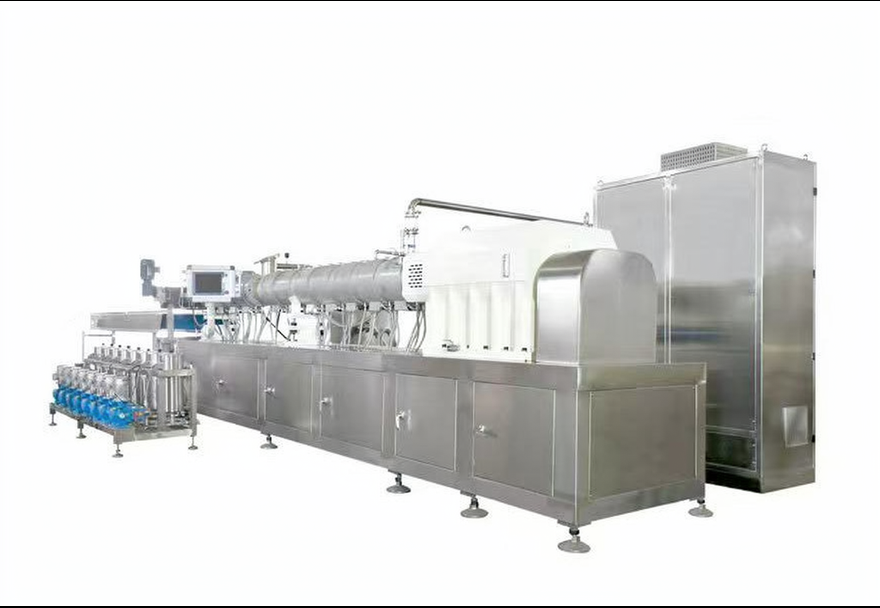
Liquorice is unforgiving. Boil the starch-sugar mass at atmospheric temperature and you scorch colour and burn off delicate anise or fruit notes; the candy darkens unevenly and the texture turns brittle. Vacuum cooking lowers the boiling point so the mass reaches its target moisture at a lower temperature — the same principle we use in our low-temp vacuum cooking and double-aerating systems for nougat and swiss candy. For liquorice and starch-based chews it delivers three concrete benefits: consistent colour across the batch, flavour that survives the cook, and far less cleaning downtime because nothing caramelises onto the pot walls.
Control system, hygiene and components
- PLC + touch screen on every main unit, with the option to link the entire line to one central touch screen — one operator can supervise cooking through cutting
- Stainless steel exterior surfaces throughout the line, for food-safe operation and fast cleaning between recipes
- Internationally known electrical brands for motors, inverters and sensors — the difference between a line that runs for a decade and one that accumulates downtime
- Recipe storage in the PLC, so changeovers between liquorice, fruit chews and toffee become a screen operation instead of a re-learning process
Checklist before you buy a liquorice line
- Product portfolio fit. Can the supplier demonstrate 4–6 colour extrusion, filled ropes and hollow shapes — the three capabilities that create new SKUs later?
- Capacity match. Size the line to your market plan, not to the brochure maximum; 500–1,000 kg/h suits most growing factories.
- Mould and die policy. Ask what new shapes cost, and how long a changeover takes.
- Utilities engineering. Steam boiler, power supply, water and floor loading should be engineered by the supplier, not guessed.
- Installation and training. Commissioning on site plus operator training should be part of the contract — the same standard we apply in our turnkey project process.
- Spare parts and after-sales. Consumables (cutters, dies, belts) must be available for years, not months.
- References. Ask for a working factory contact, ideally in a market similar to yours — our delivered case studies show what that evidence looks like.
Frequently asked questions
Can one line really run liquorice, toffee and caramel?
Yes. The cooking, forming and cutting principles are shared; what changes is the recipe and, for filled products, the co-extrusion set-up. Recipe storage in the PLC makes switching a controlled, repeatable operation.
What capacity should I start with?
A 500–1,000 kg/h line covers most export-oriented factories. If you are launching a first chewy brand, a compact configuration with a shorter cooling section is usually the smarter first investment.
How much space and which utilities does the line need?
A full-size line occupies roughly 43 × 3 metres and requires a steam boiler rated for 0.6 MPa, 380 V / 50 Hz power at around 220 kW installed, plus water and drainage at the cooking section.
What happens after cutting — sanding or drying?
It depends on the product. Extruded liquorice ropes typically go to sugar-sanding or glazing and then straight to packing; starch-mogul style pieces are cured in a drying room before demoulding. Discuss your target product with the supplier so the post-cutting equipment is planned from day one — our article on vacuum vs. atmospheric cooking explains why this stage decides texture.
Plan your line with an engineer, not a price list
A liquorice line is a 10-year production decision. The right question is not “what does it cost?” but “what will it make, reliably, with my team?” If you are evaluating options, send us your product plan — our engineers will reply with a layout, utility list and honest capacity numbers within 24 hours. You can also browse the machinery categories or read our gummy production line cost breakdown for budgeting context.